Haemoglobinometer
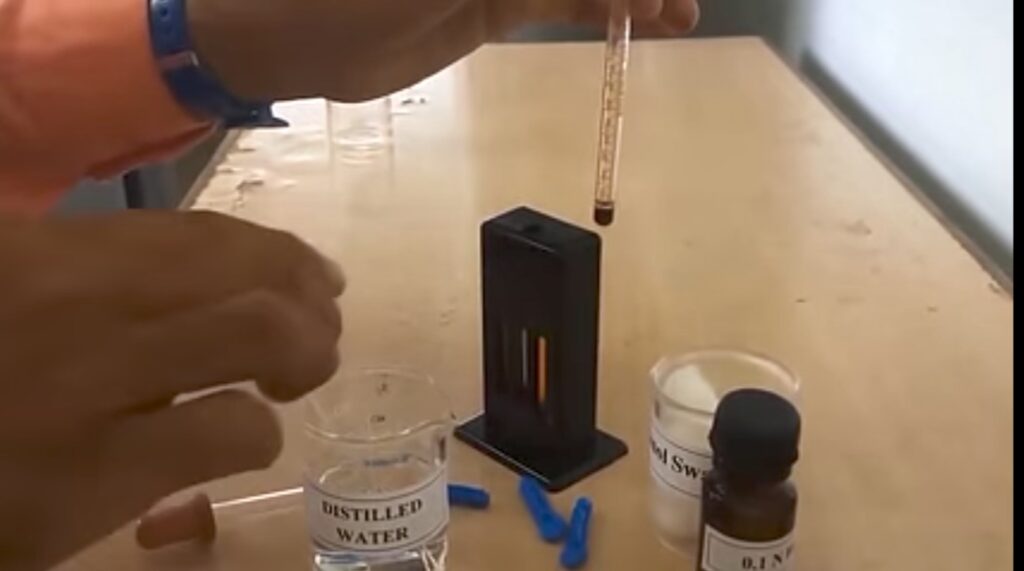
A hemoglobinometer is a medical device that measures the level of hemoglobin in a blood sample. This instrument is used in clinics, hospitals, and health camps to detect anemia and other blood-related conditions. There are two types of hemoglobinometer: conventional (such as Sahli’s) and digital/electronic. This device uses a test tube, pipette and comparator (in the conventional case), or LED/sensor (in the digital case). Modern hemoglobinometers are portable and may be battery-operated, which makes them helpful for use in remote areas. These devices provide a quick and easy reading that can speed up diagnosis and treatment. Hemoglobinometer is also used in primary health centres, blood donation camps, and community surveys.
Timalin Please: Why should I get my haemoglobin level measured?
It is very important to estimate the hemoglobin level, especially when a person shows weakness, fatigue, or pallor (pale skin). Hemoglobin is a protein in the blood that carries oxygen from the lungs to every part of the body. If its level drops (anemia), there may be lack of oxygen in the body, which can cause many health problems. Checking hemoglobin is also critical in pregnancy, surgery, blood donation, or any disease like thalassemia. Regular screening can lead to early diagnosis and correct treatment can be given timely. Haemoglobin testing is also common in school health camps, rural clinics, and blood donation drives. Overall, estimating haemoglobin level is a basic but life-saving diagnostic step.

What are the different ways to measure haemoglobin?
There are several methods available for hemoglobin estimation, ranging from visual to digital. The oldest method is Sahli’s method, in which acid hematin is formed by mixing blood with HCl and then the level is estimated by color comparison. Apart from this, the Cyanmethemoglobin method is a standard lab method in which hemoglobin is converted to cyanide form and an accurate reading is given by a spectrophotometer. Automated analyzers and digital hemoglobinometers give fast and precise results, making accurate testing possible even at the primary care level. Portable hemoglobinometers are ideal for field surveys. Each method has its own cost, accuracy, and usability profile, the selection of which depends on the use-case.
How does a haemoglobinometer work?
The working principle of a hemoglobinometer depends on its type. In Sahli’s method a fixed amount of blood drop is mixed with hydrochloric acid which forms acid hematin. The hemoglobin level is then determined by matching its colour with standard colour blocks. This method is based on visual comparison. Digital hemoglobinometers use a drop of blood which comes in contact with the sensor. The sensor works on the principle of light absorbance or photometry and gives a digital reading within seconds. Modern devices can also be connected to Bluetooth or an app so that data can be stored. This working system is fast, accurate, and easy-to-use, which increases efficiency in both remote and urban areas.
How do results change in a haemoglobinometer?
Results from a hemoglobinometer are interpreted according to normal reference values. For example-
13-17 g/dL for men
12-15 g/dL for women
11-14 g/dL for children, hemoglobin level is considered normal. If the reading is below the values, anemia may be diagnosed. Results may also be evaluated based on age, gender, pregnancy status, and geographical location. Digital hemoglobinometers provide automatic results with minimum human error, while Sahli’s method has some subjectivity. After interpreting the results, the doctor prescribes treatment based on the type and severity of the anemia – such as iron supplements, dietary changes, or other medical tests. Severe complications can be avoided by early interpretation.
What is the quality assurance protocol for a haemoglobinometer?
A number of quality assurance protocols are followed to maintain the accuracy and reliability of hemoglobinometers. The first step is regular calibration – where the device is tested against known standards. Apart from this, each batch is tested using control samples to guarantee correct results. Technicians are also given periodic training to maintain proper usage. Environmental factors such as temperature and humidity are also recorded to ensure that they do not affect performance. For digital devices, battery health and sensor cleaning are also essential quality assurance steps. Regular internal audits and external quality assessments are carried out in labs and clinics. All these protocols ensure that patients receive accurate and trustworthy reports.
How are clinical haemoglobinometers useful?
Conventional hemoglobinometers such as Sahli’s hemoglobinometer are low-cost, easy-to-use, and ideal for resource-poor settings. They are simple in design and do not require electricity. They have been used for decades in rural clinics, government health centres, and health camps. Basic training is sufficient to use them. They are also easy to maintain and parts are easily replaced in the event of a breakdown. Though accuracy is slightly lower than digital devices, their utility is still relevant in developing nations. Conventional hemoglobinometers are still in widespread use in the health sector as an affordable and effective tool for hemoglobin screening.
What are the benefits of a digital haemoglobinometer?
Digital hemoglobinometers are modern and highly accurate devices that provide rapid results. They can show accurate hemoglobin level within 10–30 seconds from just a single blood drop. Their interface is user-friendly and training is minimally required. They use sensor-based or photometric technology which makes the result bias-free. Data can also be saved or transferred via Bluetooth, which is perfect for large-scale screening. Being portable, they are also ideal for field work and mobile clinics. They are powered by battery or work with a rechargeable system. They are extensively used in anemia screening programs, antenatal checkups, and blood banks. Overall, their precision and convenience have brought about a new revolution in the diagnostic field.
Leave a Reply